Use this in Arrangement Calculator
Create your account and jump straight into Arrangement Calculator when you are ready to apply this article.
Most people order funeral flowers only a handful of times in their whole life. So they come to the counter unsure what to send, how much to spend, and what the rules are. That uncertainty is where you come in. Get the guidance right and you take a weight off someone at the worst moment of their year.
This guide covers the lot. Arrangement types, costing, flower choices, the cultural differences that catch florists out, and the etiquette customers worry about. Read it whether you are building your sympathy work or sending flowers yourself.
Types of Funeral Flower Arrangements
Hand-Tied Sheaf
A loose, natural gathering of flowers and foliage laid flat, often wrapped in cellophane or paper. A less formal option. Suits friends, neighbours, and colleagues.
Posy
A compact, rounded arrangement, usually in a small container or made up for placing directly on a grave. Sizes run from 10" to 16".
Wreath
A circular tribute. Made up as open wreaths (a ring of flowers with an open centre) or full wreaths (covered all the way round).
Single-Ended Spray
An arrangement with a pointed end, designed to be viewed from one main direction. Confirm where it will be placed before choosing its size and construction.
Coffin Spray (Double-Ended)
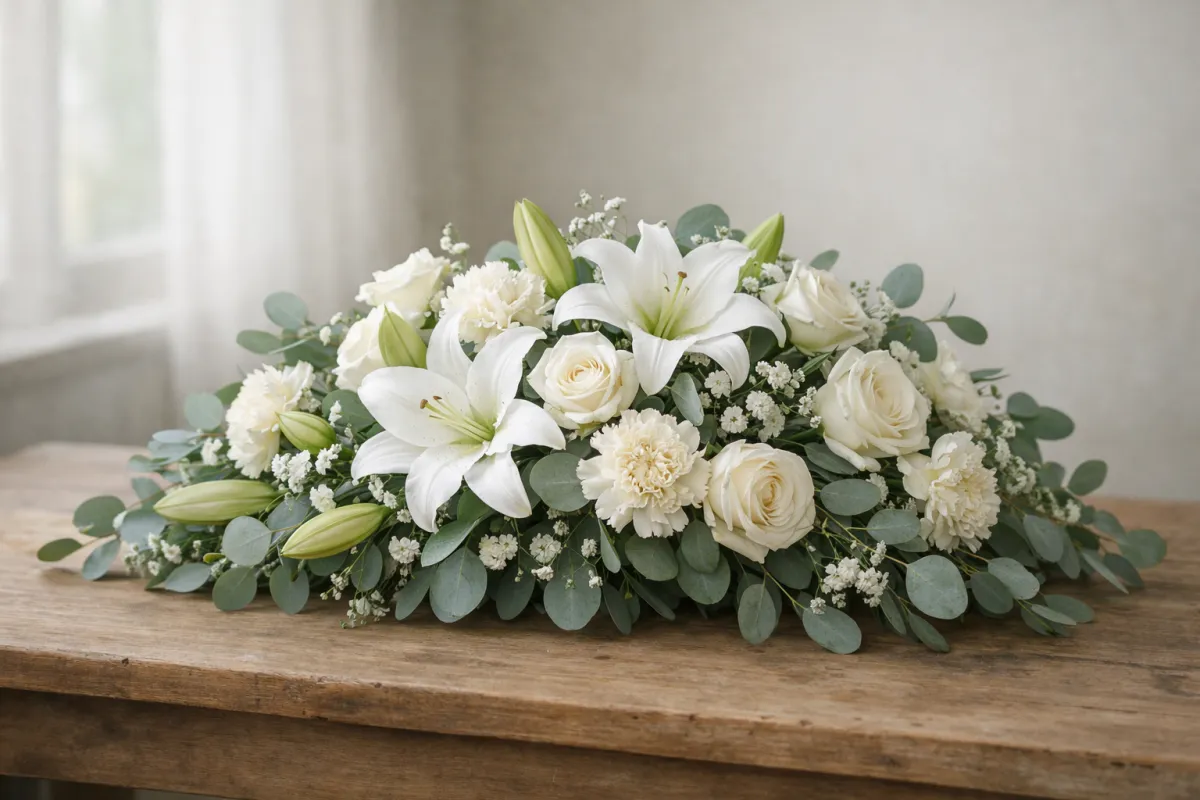
A long, elegant tribute that sits on top of the coffin. Usually ordered by the immediate family. Lengths run from 2ft to 6ft.
Heart
A heart-shaped tribute, either full (covered in flowers) or open (a heart outline). Traditionally from a spouse, partner, or close family member.
Cross
A cross-shaped tribute, well suited to Christian services.
Letter Tributes
Single letters spelling out words like "MUM," "DAD," "NAN," or a name. Built on foam or moss-filled letter frames covered in flowers. Usually from children or grandchildren.
Bespoke Tributes
Custom designs that reflect the person who has died: a football, a guitar, a garden scene, a favourite animal. These need a consultation and a longer lead time.
Flower Choices and Symbolism
Choosing Flowers With the Family
Ask about favourite flowers, colours, scent and anything the family wants to avoid. Flower meanings are not a fixed code: a red rose or white lily can mean something different to each person. Do not restrict a flower to a particular relative or assume a colour will suit every service.
Show photographs of designs you can make, then confirm the size, available stems and substitutions. A meadow-style tribute, a formal spray and a bright hand-tied sheaf give customers different starting points without telling them how grief should look.
Costing the Design
Quote from the chosen recipe, frame or container, labour and delivery. There is no national price list that can account for your supplier costs or the work in a bespoke tribute. Explain what the customer's budget includes and get agreement before changing the design.
Cultural and Religious Differences
This is one of the areas florists most need to get right. Getting it wrong causes real distress at an already hard time.
Check the Service and the Family's Wishes
Ask the funeral director or family whether flowers are wanted, which designs can be displayed and whether the venue has rules about materials. A secular service can have restrictions too, particularly at a natural burial ground.
Do not treat a religion as a complete set of ordering instructions. For example, Chabad's description of a traditional Jewish funeral says flowers are not part of the service. Check the particular family's wishes instead of substituting a food gift or donation without asking.
For Muslim, Hindu, Sikh and Christian services, confirm the arrangements with the family or funeral director rather than prescribing colours, gifts or delivery times from a general guide. The family may already have arranged the tributes they want.
Etiquette Rules
When to Send Flowers
For the funeral service: contact the florist as soon as the arrangements are known. Agree the order deadline and delivery window with the florist and funeral director; specific flowers or bespoke frames may need more notice.
Sympathy flowers to the home: these can go at any time, before, during, or after the funeral. Sending flowers a week or two after the service is a genuinely thoughtful move, because grief carries on long after the last card has been read.
Anniversary flowers: flowers on the anniversary of the death, the person's birthday, or at Christmas mean a great deal and are often forgotten.
Who Typically Sends What
| Sender | Typical Tribute |
|---|---|
| Spouse or partner | Coffin spray, heart, or personal wreath |
| Children | Letter tribute ("MUM," "DAD"), coffin spray, or heart |
| Grandchildren | Smaller heart, posy, or a share of a joint tribute |
| Parents of the person who has died | Wreath, cross, or coffin spray |
| Siblings | Wreath, spray, or heart |
| Close friends | Sheaf, posy, or wreath |
| Work colleagues (group collection) | Wreath or spray |
| Neighbours or acquaintances | Posy or small sheaf |
Card Messages
Plenty of customers freeze when faced with a sympathy card. Having suggested wording ready, on your website or at the counter, helps the hesitant ones decide and takes the pressure off at a stressful moment. Our sympathy card message writer gives you wording to hand over on the spot.
Short and simple:
- "Thinking of you at this difficult time."
- "With deepest sympathy from all at [company name]."
- "Forever in our hearts."
- "With love and fond memories."
More personal:
- "Thinking of you and wishing you strength in this difficult time."
- "[Name] brought so much joy to everyone who knew them. They will be greatly missed."
What to avoid:
- "Everything happens for a reason" (feels dismissive)
- "They're in a better place" (may not match the family's beliefs)
- "I know how you feel" (presumptuous)
When Not to Send Flowers
Respect the family's wishes. If the notice says "family flowers only," only the immediate family arranges floral tributes. If it says "donations in lieu of flowers" or "no flowers, please," a sympathy card is still welcome, but flowers are not.
If the notice is unclear, ask the family or funeral director before choosing flowers, a gift or a donation.
Delivery and Logistics
Where Funeral Flowers Go
Delivery may be to the funeral director or directly to the venue. Confirm who will receive and move the tributes before dispatch.
Sympathy flowers for the home go straight to the family, either before or after the funeral.
Timing
Agree a delivery window with the funeral director before accepting the order. Confirm the name of the person who has died, the funeral director's name and address, the date and time of service, and any specific delivery notes.
For crematorium deliveries, check the permitted arrival time, receiving point and who will accept the flowers.
Working with Funeral Directors
Agree a clear ordering and delivery process with each funeral director you work with.
Give funeral directors a current selection guide with photographs, descriptions, and prices. The Pricing Guide Generator builds a printable price list you can hand over and update as your costs change. Be reachable at short notice. Confirm details rather than assume them. Some funeral directors take a commission or markup on flowers ordered through them, so build that into your pricing.
Modern Trends
Eco-Friendly Funeral Flowers
Ask the venue which materials it permits. The Church of England's February 2026 Synod motion encourages local flowers and foliage and avoiding single-use plastics, including floral foam. It does not set rules for every church.
Discuss construction and disposal together. Moss, wire, reusable supports and willow frames need different handling; a foam-free design is not automatically suitable for every burial site. Check the venue's requirements before quoting.
British-Grown and Seasonal Flowers
If the family wants locally grown flowers, ask the grower what will be available for the date. Agree substitutions and packaging with the customer. Avoid promising a particular stem before supply is confirmed.
Flower Preservation
If a customer wants to preserve flowers, ask a specialist what they can accept, how soon they need them, and the current cost and lead time. Agree collection or delivery before the service so the flowers are handled as required.
Memorial and Anniversary Flowers
A reminder service for the anniversary of the death, the person's birthday, or other key dates brings in recurring work and deepens loyalty. Delivering flowers to a grave, garden of remembrance, or the family home on those dates is a service families really value. The Digital Florists platform can send those reminders automatically, so the family hears from you before the date rather than you trying to remember it.
Advice for Florists
Handling Emotional Customers
Patience and empathy come first. Customers ordering funeral flowers are often in grief, shock, or distress. Don't rush their decisions. Offer help gently: "Would you like me to suggest some options?"
Have a private consultation area if you can. Funeral flower talks should not happen across a busy shop counter. Train all your staff in handling these conversations with care, not only the lead florist.
Managing Rush Orders
Have a process for fast-turnaround funeral work. Before accepting a same-day order, check available stems, materials, workroom time and the delivery deadline.
For bespoke tributes that need specific flowers, be honest about lead times. Explain any additional cost before the customer agrees to the order.
Building Your Sympathy Business
Track your own sympathy orders through the year when planning stock and workroom capacity. Investing in funeral director relationships, keeping a clear online gallery with prices, and training your team in sensitive service are the foundations of a strong sympathy offering.
Common Questions
What is the etiquette for sending funeral flowers?
Read the funeral notice first and respect requests for family flowers only or donations. If flowers are wanted, agree the design, order deadline and delivery arrangements with the florist and funeral director.
How much should you spend on funeral flowers?
Choose a budget you are comfortable with and ask what it covers. Size, stems, construction, labour and delivery all affect the quote. A smaller design in the person's favourite colours can be a personal tribute too.
What colour flowers are appropriate for a funeral?
Ask about the person's favourite colours and the family's wishes. No colour suits every service, and you do not need to choose white unless that is what the family wants.
What do you write on a funeral flower card?
Keep it short and warm. "Thinking of you at this difficult time," "With deepest sympathy from all at [company name]," or "Forever in our hearts" all work well. For something more personal, name a happy memory. Avoid lines like "everything happens for a reason" or "I know how you feel," which can land badly. A sympathy card message writer gives you wording to offer hesitant customers.
Are flowers appropriate for every funeral?
No. Read the funeral notice and check with the family or funeral director. Religious practice, venue requirements and personal wishes can all affect whether flowers are wanted.
When should funeral flowers be delivered?
Use the delivery window agreed with the funeral director or venue. Confirm the service details, receiving address and contact before dispatch. For flowers sent to the home, check a suitable time with the recipient.
If you want to price your sympathy and funeral work accurately, the Arrangement Calculator and Tribute Calculator can help you cost each design using your own costs.
Ready to apply this?
Open the florist tools that save the most time first
Start with Arrangement Calculator and move from reading to doing in one step.
Try next
More tools for this topic
Arrangement Calculator
Price individual arrangements from stem and sundry costs. Choose pre-tax markups, add labour and tax once, the...
Pricing Guide Generator
Create printable pricing guides for your team with flower markups, labour costs and sundries at every price po...
Business Markup Calculator
Turn your annual overheads, stock spend and profit goal into the one average markup your shop needs. Or start...