Use this in Arrangement Calculator
Create your account and jump straight into Arrangement Calculator when you are ready to apply this article.
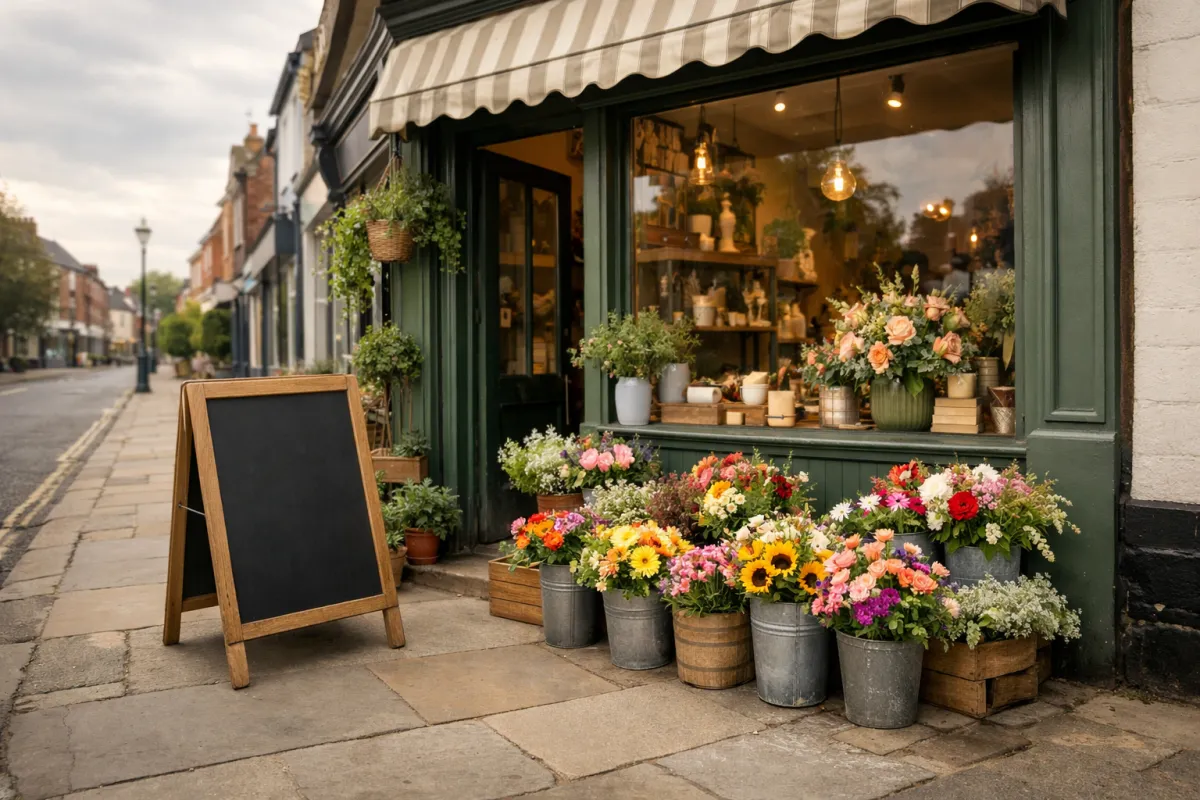
If you want to know how to become a florist in the UK, the honest answer is that there are college, apprenticeship and on-the-job routes, but you do need to know what the job is really like before you commit. From the outside it looks idyllic: surrounded by flowers all day, making arrangements, making people happy. The reality is more mixed. It is physically demanding, often poorly paid at the start, and involves far more cleaning and driving than most people expect. It is also creative, rewarding, and one of the most open skilled trades you can walk into.
Here is a straight guide to what it takes, what it pays, and what the work looks like day to day.
Do You Need Qualifications?
You can start through college, an apprenticeship or work as a shop assistant, as the National Careers Service explains. Employers and training providers set their own entry requirements.
That said, formal qualifications give you structured learning, industry-recognised credentials, and a foundation that teaching yourself cannot always match. If you want to work for an established florist or progress quickly, qualifications help.
Florist Qualifications in the UK
City & Guilds offers floristry qualifications and technical floristry qualifications. Compare the exact award and current course availability:
Level 2 Diploma in Floristry is one route for building practical floristry skills. Review the units with the provider. Ask the college about course length, entry requirements and funding for your age and circumstances.
Level 3 Advanced Technical Diploma in Floristry develops technical and professional floristry skills. Check the requirements of the senior or teaching role you want; one diploma does not guarantee eligibility.
Ask whether flowers, tools and assessment costs are included in the advertised fee before you enrol.
Apprenticeships
A floristry apprenticeship combines paid work in a florist business with training. Check the working hours and study arrangements in the apprenticeship agreement.
Ask providers about the Level 2 Florist apprenticeship and any progression routes they offer. Confirm the training period and assessment arrangements for the programme you are applying to.
Pay
From 1 April 2026, the apprentice minimum wage is £8.00 per hour. It applies to apprentices under 19 and those aged 19 or over in their first year. After that first year, apprentices aged 19 or over must receive at least the minimum wage for their age. The rate for workers aged 21 and over is £12.71 per hour.
Funding
Funding depends on where the apprentice works, their age when training starts and whether the employer pays the apprenticeship levy. The following applies to eligible apprenticeships in England starting from 1 August 2026.
For employers that do not pay the levy, government funding covers 100% of eligible training and assessment costs for apprentices aged 16 to 24, up to the funding band maximum. For other eligible apprentices, the employer normally pays 5% and government funding covers 95%. Employers pay any agreed costs above the funding band maximum. Check the current apprenticeship funding rules with the training provider before agreeing fees.
Scotland, Wales and Northern Ireland have separate arrangements. These percentages concern approved apprenticeship training, not an automatic refund for a private floristry course you have already paid for. Ask your provider what funding applies to your course and start date.
Finding Apprenticeships
Search the GOV.UK Find an Apprenticeship service by postcode and check which providers cover your area. Look at the British Florist Association website for careers information, or take your CV to local florists.
Florist Courses and Private Flower Schools
If you want intensive, hands-on training without the time commitment of a college course, private flower schools run focused programmes.
When comparing schools such as McQueens, Judith Blacklock, Tallulah Rose and Kay's Flower School, check the current course details directly. Compare fees, teaching hours and the amount of tutor feedback you receive. Ask what flowers and equipment you need to buy yourself.
Check whether the course leads to a recognised qualification or a school certificate, and whether it covers costing and running a business. Confirm attendance requirements, online access and any cancellation terms before paying.
Various local colleges and independent schools across the UK offer shorter workshops and certificates. These are a good way to test whether floristry suits you before committing to a full qualification.
How to Become a Florist From Home With No Experience
Look for assistant or trainee opportunities that match your current experience. Ask what training is provided:
Saturday or part-time work in a flower shop is the traditional entry point. Read each vacancy's requirements rather than assuming experience is unnecessary. Ask which tasks you would do and who would supervise your training.
Volunteering at events through the British Florist Association, at local churches for flower arranging, or offering free help at weddings and events builds practical experience and portfolio material.
Teaching yourself at home using supermarket flowers is a fair starting point. Follow florists on social media for technique inspiration, photograph your work to build a portfolio, and attend short workshops to learn the basics. This is also how a lot of home-based florists get going before they take their first paying order.
Compare the wage, working hours, travel costs and training before accepting a role. Ask the employer which skills and qualifications it requires.
Salary and Earnings
Employed Florists
Compare advertised pay alongside contracted hours, location and responsibilities. An annual salary without weekly hours can make a part-time job look like a poorly paid full-time role.
At the £12.71 minimum rate for workers aged 21 and over, 37.5 paid hours a week across 52 weeks gives £24,784.50 a year before deductions. This is a worked minimum-wage example, not an estimate of the market salary for a florist. Younger workers and eligible apprentices have different minimum rates.
Freelance Florists
A self-employed florist needs to price more than the hours spent making up. Allow for preparation, travel, equipment and business costs, along with unpaid time between jobs. Agree what a day rate covers, including the hours and any travel expenses.
Employment rights depend on the working arrangement, so a job described as freelance is not automatically self-employment.
Wedding Florists
For illustration, 30 weddings at £2,000 each bring in £60,000 in sales. That is not take-home pay: flowers, labour, delivery, hire items and overheads still have to come out. Price each wedding from its recipe, time and costs. If you want to see how those costs and margins work on a single arrangement, our arrangement calculator breaks it down stem by stem.
The Honest Picture
Look at the wage, paid hours and training together when comparing entry-level jobs. Self-employment gives you control over the work you take on, but sales are not a salary. You need enough left after costs to pay yourself and cover quieter weeks.
What the Job Really Looks Like
An Example Shop Day
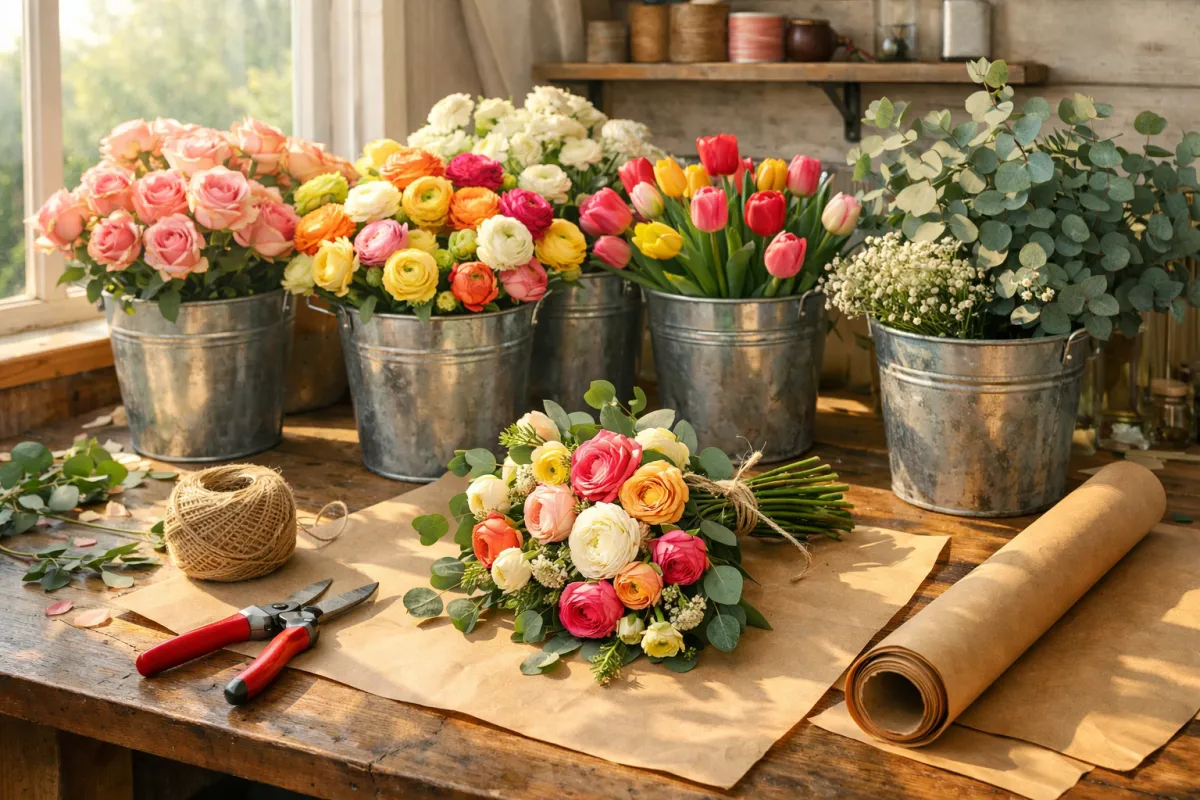
6:00-8:00am: A lot of florists start early. Trips to the wholesale flower market. Receiving and checking deliveries. Conditioning flowers: unwrapping, cutting stems, hydrating, removing damaged foliage.
8:00am-12:00pm: Processing orders from overnight and phone/web. Making up bouquets and arrangements. Preparing funeral tributes. Customer consultations for weddings and events.
12:00-5:00pm: Deliveries (florists often drive their own van). Walk-in customer service. Working on bespoke orders. Admin: invoicing, ordering stock, managing social media.
Late afternoon: Cleaning work surfaces, sweeping, mopping. Restocking displays. Ordering flowers for the next day from wholesalers.
The Parts Nobody Mentions
Ask how the role divides time between making up, preparation, cleaning, deliveries, customer service, admin and stock management. That split depends on the shop and your responsibilities.
The working environment can be cool. Ask about clothing and handling requirements, and follow the flower supplier's storage guidance rather than applying one fridge temperature to every stem.
You will get wet. Constantly. Handling buckets of water, conditioning stems, and cleaning are part of every single day.
Ask about the shop's peak periods, expected overtime and weekend work. Valentine's Day, Mother's Day and event bookings can change the workload. Plan cover so staff can take their required rest breaks.
Physical Demands
Standing for most of the day. Lifting heavy buckets, vases, and event installations. Working at height on ladders for large installations. Driving delivery vehicles. Ask about safe handling, suitable equipment and rest breaks before taking on these tasks.
Career Paths
The Progression Ladder
- Junior Florist / Trainee: Processing flowers, cleaning, taking orders, practising simpler designs under supervision.
- Florist: Making up designs independently. Building commercial speed and consistency.
- Senior Florist: Complex commissions, wedding and event work, mentoring junior staff.
- Manager / Head Florist: Managing operations, ordering, staff, financial responsibility.
- Business Owner: Running your own shop, studio, or home-based business.
Specialist Paths
Wedding and event floristry involves costing and preparing work for specific event dates. The scale of each booking changes the time, materials and team you need.
Funeral floristry involves preparing work to a service date and the family's brief. It needs sensitivity and attention to cultural requirements, and is intense, artistic work.
Corporate floristry means regular contracts for hotels, offices, and restaurants, under the terms and renewal arrangements you agree.
Freelancing gives flexibility but needs you to build a reputation and run the business side yourself.
Teaching at colleges, private schools, or through your own workshops combines experience with education.
Starting a Business
Business Models
Home-based florist: Budget for suitable storage, tools, stock, a website and delivery. Check permissions, insurance and possible business rates for home businesses before buying equipment or inviting customers.
Shop-based florist: Get quotes for premises, fit-out, storage, equipment, stock and delivery arrangements. Include deposits, running costs and cash for the period before sales cover those costs.
Online-only / studio florist: Cost the space, storage, delivery and ways customers will find and order from you. Check the complete budget instead of assuming a studio always has lower overheads.
Legal Requirements
Choose your business structure and check the registration requirements for it. VAT registration depends on taxable turnover and timing, including a next-30-days test, not only a year-end total. If you employ staff, check the employers' liability rules and exemptions. Premises and additional activities may need separate permissions.
Industry Reality
Research the demand in the area and the kind of work you want to sell. National market totals do not tell you whether your proposed shop can cover its costs.
Consider how customers will find you and which orders you can fulfil. Test that plan alongside the budget for premises, staff and stock. Software like the Digital Florists platform handles order management and sends automated review-request and customer notifications, so a small team can keep up.
Where the Opportunities Are
- Wedding and event floristry, with consultations, setup and collection included in the quote
- British-grown and seasonal flowers, where supply matches the designs you offer
- Social media-savvy florists building direct-to-consumer brands
- Corporate contracts for hotels, offices, and restaurants
- Workshop and experience-based revenue (wreath making, flower arranging classes)
Honest Advice
Floristry is not a get-rich-quick career. The entry-level pay is low, the work is physical, and the hours are long during peak periods. But it is genuinely creative, deeply satisfying when you see a customer's reaction to your work, and one of the few skilled trades you can enter with no prior experience or qualifications.
If you are thinking about the leap, start by spending a day or two in a working florist's shop. Volunteer, do work experience, or take a short workshop. The reality of 6am market runs, cold water, and cleaning is very different from the Instagram version. If you still love it after that, you have found the right career.
The British Florist Association is the main UK trade body and a good starting point for careers information, training providers, and industry events.
Common Questions
How do I become a florist in the UK with no experience?
Start with Saturday or part-time work in a local shop, volunteer at events through the British Florist Association, or teach yourself at home with supermarket flowers and short workshops. Check each role's entry requirements and ask what supervised training is included.
What qualifications do you need to be a florist in the UK?
Routes include college study, apprenticeships and learning on the job. City & Guilds floristry diplomas are one training option; individual jobs and courses have their own requirements. Ask the college which course it currently runs, what it costs and what funding you qualify for.
Can you become a florist from home in the UK?
A home or studio business is an option to investigate. Check permission, insurance, storage, delivery arrangements and your own startup budget first. You can learn online through schools such as Kay's Flower School, build a portfolio with supermarket flowers, then take paying orders once you are ready.
What florist courses are available in the UK?
College diplomas (City & Guilds Level 2 and 3), apprenticeships, and private flower schools such as McQueens, Judith Blacklock, Tallulah Rose, and Kay's Flower School. Compare current fees, teaching hours, materials and the qualification or certificate offered before booking.
How much do florists earn in the UK?
Compare current vacancies by hours, location and responsibilities. As a minimum-wage illustration, £12.71 an hour for 37.5 paid hours a week across 52 weeks is £24,784.50 before deductions. Different minimum rates apply to younger workers and eligible apprentices. Self-employed florists need to deduct business costs from sales before working out their income.
How long does it take to become a florist?
The route and your study hours affect how long it takes. Ask the college or apprenticeship provider for its current training and assessment timetable. Practical experience matters alongside coursework: start with work you can make up reliably and build your range as your skills improve.
If you are setting up your own floristry business, our tools can help you get started. The free Florist Shop Name Generator creates name ideas, the free Arrangement Calculator helps you price your work stem by stem, and the free Pricing Guide generator builds a printable price list for your shop. When you are ready to set proper margins, the Business Markup Calculator (on a paid plan) checks that your prices cover your overheads. To run the whole shop in one place, from a product database with recipe lists to automated customer notifications, Digital Florists brings it together.
Ready to apply this?
Open the florist tools that save the most time first
Start with Arrangement Calculator and move from reading to doing in one step.
Try next
More tools for this topic
Arrangement Calculator
Price individual arrangements from stem and sundry costs. Choose pre-tax markups, add labour and tax once, the...
Pricing Guide Generator
Create printable pricing guides for your team with flower markups, labour costs and sundries at every price po...
Business Markup Calculator
Turn your annual overheads, stock spend and profit goal into the one average markup your shop needs. Or start...