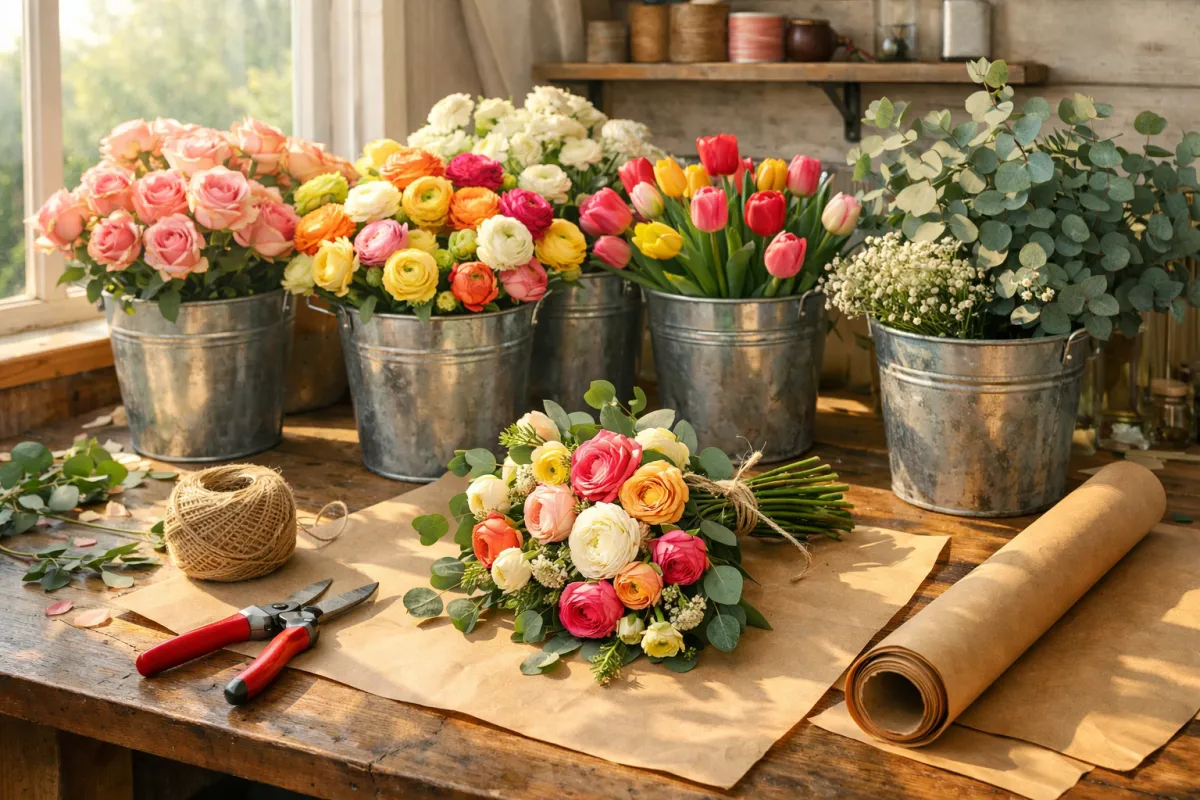
Use this in Florist Shop Name Generator
Create your account and jump straight into Florist Shop Name Generator when you are ready to apply this article.
Choosing a name for your florist business is one of those decisions that feels simple until you actually sit down to do it. You want something memorable, something that reflects your style, and something that hasn't already been taken by a florist three towns over. This guide walks you through the process step by step.
Why Your Name Matters More Than You Think
Your business name is doing more work than you realise:
- It's your first impression. Before anyone sees your flowers, they see your name: on Google, on a delivery card, on a friend's recommendation.
- It affects your search ranking. A name that includes relevant words (like "flowers" or "bloom") gives Google a signal about what you do. "Bloom & Co" will rank more easily for florist searches than an abstract name.
- It shapes referrals. When someone says "Oh, you should use..." and then can't remember the name, that's a lost customer. Simple, distinctive names spread by word of mouth.
- It sets expectations. "The Flower Atelier" says luxury. "Muddy Stems" says relaxed and rustic. "Wilson's Florals" says family trust. Your name primes every customer interaction that follows.
Step 1: Define What Your Shop Is About
Before brainstorming names, get clear on three things:
Your niche. Are you a wedding specialist? A high street shop doing everyday bouquets? An eco florist using only British-grown, seasonal stems? Your name should hint at your specialism.
Your personality. Are you formal or casual? Traditional or contemporary? Playful or refined? The tone of your name needs to match the experience customers will have.
Your audience. A farm shop florist in the Cotswolds is speaking to a different customer than an online studio florist in Shoreditch. Think about who you want to attract and what language resonates with them.
Step 2: Choose a Naming Strategy
Most successful florist names follow one of these patterns:
Descriptive names
These tell customers exactly what you do: The Flower Room, Country Garden Floristry, Bloom & Branch. They're safe, clear, and easy to find on Google.
Personal names
Your name or surname becomes the brand: Flowers by Sarah, Clarke's Blooms, The Wilson Flower Company. These carry instant trust and work especially well for family businesses and sole traders.
Evocative names
These create a feeling rather than describing the product: Verdure, Golden Hour Florals, Wildflower Workshop. They give you creative freedom but may need more marketing effort to establish what you actually sell.
Compound names
Pairing two words with an ampersand or "and": Stem & Stone, Petal & Post, Root & Bloom. This structure is popular, distinctive, and works well as a logo.
Location names
Anchoring your brand to a place: Cotswold Blooms, The Harrogate Flower Company, Harbour Bloom. Excellent for local SEO and building community identity.
Practical tip: Pick one strategy and commit to it. Mixing strategies ("Sarah's Verdure Cotswold Bloom Studio") creates confusion, not sophistication.
Step 3: Brainstorm Freely, Then Edit Ruthlessly
Set a timer for 20 minutes and write down every name that comes to mind. Don't judge them yet. Use these prompts to get started:
- What flowers or plants do you love most?
- What words describe how you want customers to feel?
- What's distinctive about your local area?
- Do you have a family name that carries weight?
- What two words would you want people to associate with your shop?
Once you have a long list, apply these filters:
- Cross off anything longer than three words.
- Cross off anything you'd have to spell out on the phone.
- Cross off anything too similar to an existing well-known brand.
- Cross off anything that limits your future growth. ("Wedding Roses Only" is a problem when you want to do corporate work next year.)
You should be left with 5-10 strong contenders.
Step 4: Test Your Shortlist
Before falling in love with a name, put it through these real-world tests:
The phone test. Call a friend and say "Good morning, [name], how can I help?" Does it flow naturally?
The search test. Google the name. Is anyone else using it? Is there a dominant result that would bury you?
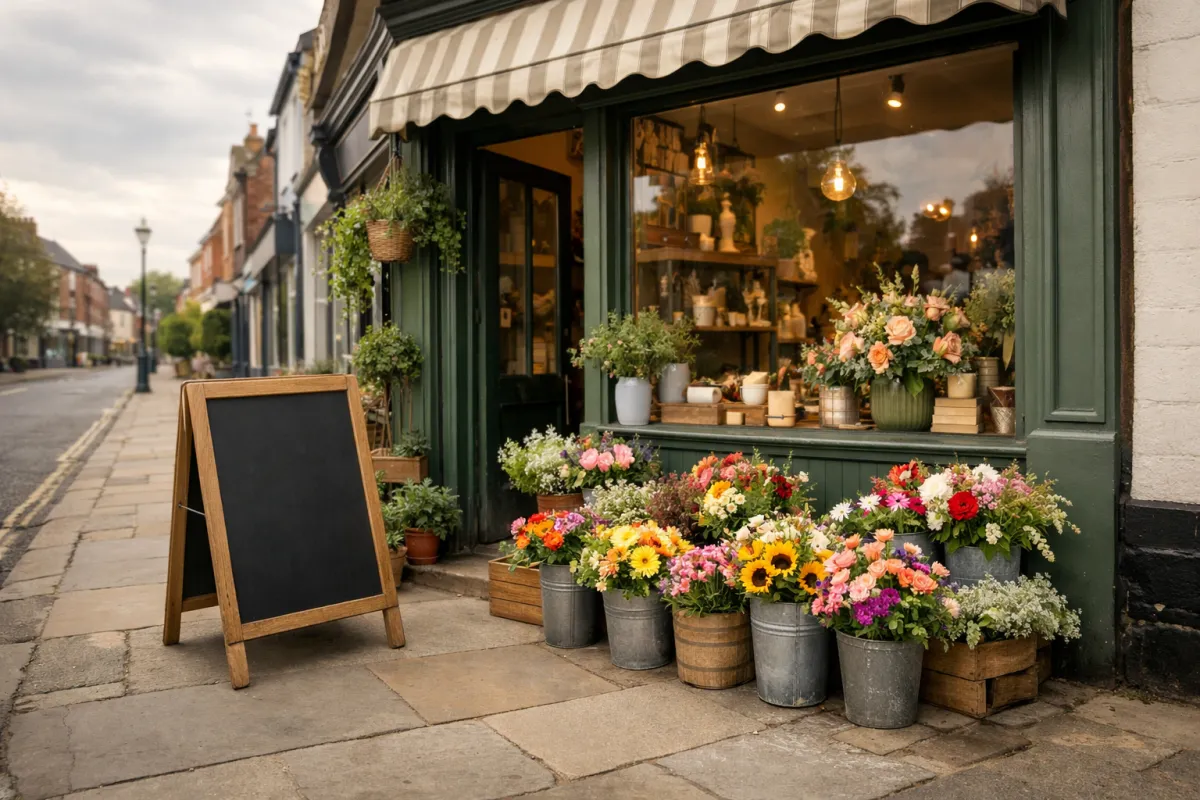
The sign test. Will it fit on a shop fascia, a delivery van, a business card, and an Instagram bio? Long names get truncated everywhere it matters.
The friend test. Tell three people your name. A week later, ask them what it was. If they can't remember, it's not sticky enough.
The spelling test. Text the name to someone. Can they spell it back correctly without asking?
Step 5: Check Availability
This is the step people skip, and regret. Before committing:
- Companies House: Search the company name register. Even if you're a sole trader now, you may want to incorporate later.
- .co.uk domain: Check domain availability. If the .co.uk is taken, consider whether the .com or an alternative is acceptable.
- Social media handles: Search Instagram, Facebook, and TikTok for your exact name. A dormant account with your name still causes confusion.
- Trademark register: Check the UK IPO trademark database. Focus on Class 31 (live plants and flowers) and Class 35 (retail services).
- Google Maps: Search "florist [your name] [your area]" to see if a similar business already operates nearby.
Common Mistakes to Avoid
Using "florist" in your Instagram handle. @bloom.and" reads better than @bloomfloristshop. Keep handles clean.
Copying a competitor. If the florist in the next town is "Petal & Stem," don't be "Stem & Petal." It looks derivative and causes genuine customer confusion.
Overthinking it. The perfect name is the enemy of the good name. Your branding, your flowers, and your service will define your reputation far more than the name itself. Pick something solid and move forward.
Ignoring your own surname. Family names carry weight in floristry. "[Surname]'s Flowers" or "Flowers by [Surname]" is simple, trustworthy, and impossible to confuse with anyone else.
What to Do Once You've Decided
- Register your domain immediately, even before you build a website.
- Secure social media handles on Instagram, Facebook, and TikTok.
- Register with HMRC as a sole trader, or incorporate at Companies House if going limited.
- Get your Google Business Profile set up. This is how customers find you on Google Maps.
- Order basic branding: business cards, a simple logo, and van signage if applicable.
Need Inspiration?
If you're stuck at the brainstorming stage, try our Florist Shop Name Generator. Describe your ideal flower shop (the style, niche, and location) and it'll suggest eight tailored name ideas with taglines in seconds.
For a ready-made collection to browse, see our Flower Shop Name Ideas, with 300+ names organised by style, from classic to eco to luxury.
And for a broad list grouped by personality and niche, read our companion post: Flower Shop Names: 150+ Ideas by Style.
Ready to apply this?
Turn naming ideas into launch-ready florist names
Start with Florist Shop Name Generator and move from reading to doing in one step.
Try next
More tools for this topic
Florist Shop Name Generator
AI-powered shop name ideas for florists — creative, brandable business names tailored to your style, location,...
Bouquet Name Generator
AI-crafted bouquet names tuned for weddings, sympathy, seasonal campaigns, and everyday ranges — ready to past...
Tribute Calculator
Price tribute letters, words, and shapes with accurate stem counts, OASIS frame costs, and variety comparison...